
Standard orange terracotta pots have been a staple of gardening for generations. Breathable, affordable, and timeless, they offer the perfect natural home for plant roots. However, standard raw clay can sometimes clash with contemporary, curated interior aesthetics.
Transforming a basic clay pot into a bespoke centerpiece requires little more than a brush, some acrylic paint, and an afternoon of creativity. Hand-painted planters allow you to bridge the gap between organic foliage and interior design, complementing everything from sleek mid-century credenzas to minimalist Japandi shelving.
Here are 10 chic, modern hand-painted terracotta pot designs to elevate your indoor jungle, along with essential tips for styling and technique.
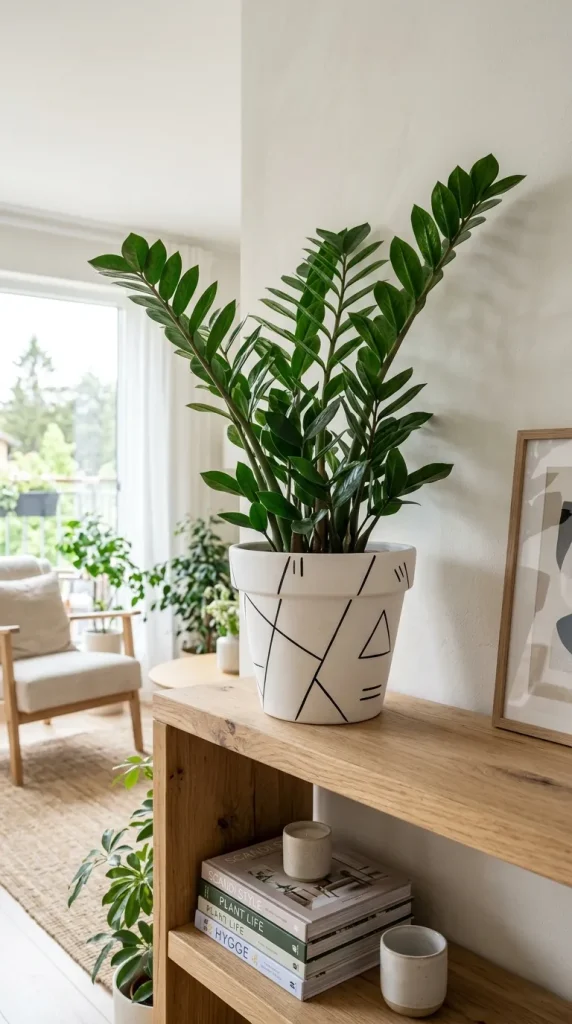
1. Minimalist Scandinavian Monochrome
Minimalist interiors thrive on restraint, contrast, and clean silhouettes. A monochrome terracotta design strips away visual clutter, turning foliage into the primary focal point.
- The Palette: Crisp chalk white, ultra-matte charcoal, and soft warm grey.
- The Technique: Coat the pot in an even matte white base. Once dry, use fine-tip artist brushes or painter’s tape to render precise, ultra-thin geometric lines, vertical grids, or asymmetrical half-circles in matte black.
- Best Paired With: Architectural plants with defined leaf structures, such as the Zamioculcas zamiifolia (ZZ Plant) or a structural Sansevieria (Snake Plant).
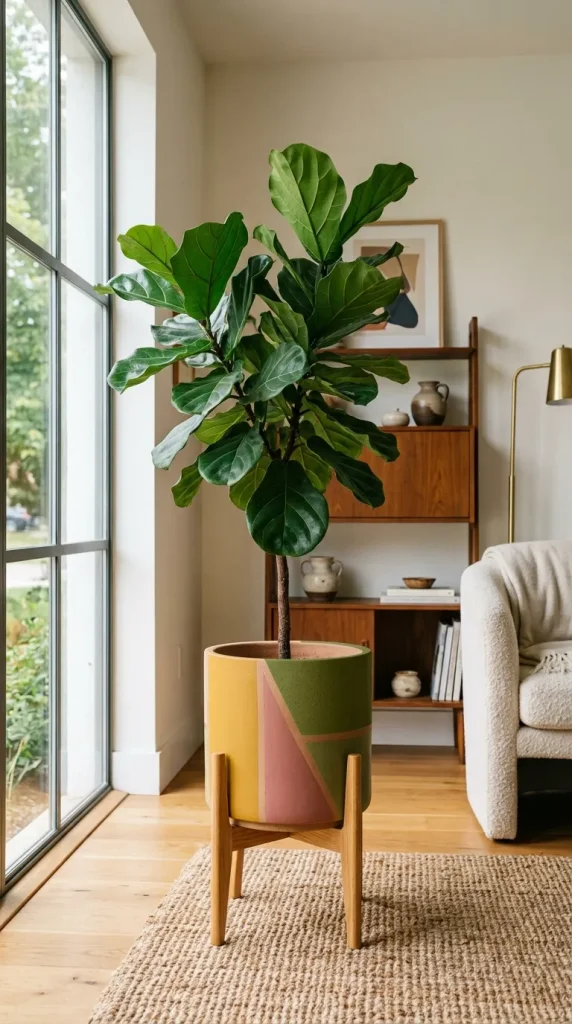
2. Mid-Century Modern Color Blocking
Mid-century modern decor celebrates bold geometry and warm, retro-inspired tones. Color blocking brings dynamic energy to standard cylindrical or tapered pots without overwhelming the room.
- The Palette: Mustard yellow, dusty rose, burnt sienna, and olive green.
- The Technique: Section off dynamic angular quadrants or semi-circular blocks using low-tack painter’s tape. Paint each section with a smooth, opaque coat, leaving portions of the raw, unpainted terracotta exposed to add natural texture.
- Best Paired With: The architectural, violin-shaped leaves of a Ficus lyrata (Fiddle Leaf Fig) or an upright Rubber Tree (Ficus elastica).
3. Sun-Drenched Abstract Arches
Bohemian and desert-modern interiors rely heavily on organic silhouettes, continuous arches, and soothing earth tones. Abstract arches soften rigid shelf lines and echo natural architectural forms.
- The Palette: Warm sand, terracotta, terracotta-red, clay peach, and pale almond.
- The Technique: Freehand overlapping arches and rounded pillars extending upward from the base of the pot. Layer different tonal values to create depth, finishing with tiny hand-painted speckles or scattered dots in a contrasting cream shade.
- Best Paired With: Trailing succulents like String of Pearls (Senecio rowleyanus) or a cascading Hoya carnosa.

4. Faux Terrazzo & Speckled Stone
Terrazzo continues to be a dominant trend in high-end homeware. Recreating this speckled, aggregate stone look on terracotta gives your planters an artisanal, ceramic-studio finish.
- The Palette: Matte off-white or light sage base with flecks of terracotta, forest green, amber, and slate blue.
- The Technique: Paint the entire pot in a neutral, creamy background color. Using a small angled detail brush, apply irregular, flat-edged geometric shapes and specks randomly across the surface. Ensure shapes vary naturally in size and orientation.
- Best Paired With: Soft, bushy foliage such as the Maidenhair Fern or a compact Peperomia obtusifolia.

5. Continuous Botanical Line Art
Fine line illustrations evoke modern gallery art prints. Painting continuous, single-line faces or stylized Monstera and palm leaves adds an intimate, museum-worthy sophistication to any room.
- The Palette: Raw unpainted terracotta background with crisp white or deep espresso line work.
- The Technique: Seal the raw pot with a clear matte sealant first. Using an acrylic paint pen with a 1mm or 2mm nib, smoothly draw continuous abstract profiles, continuous leaf vines, or fluid contour forms around the pot’s exterior circumference.
- Best Paired With: Dainty, delicate plants like the Pilea peperomioides (Chinese Money Plant) or String of Hearts.

6. Metallic Ochre & Dipped Gold Rim
If your interior features brass hardware, warm metals, or rich woods, a metallic-accented planter creates seamless harmony across the room.
- The Palette: Deep matte navy or charcoal slate paired with metallic liquid gold or warm copper leaf.
- The Technique: Paint the lower two-thirds of the pot in an ultra-matte dark hue. Apply painter’s tape along the top rim or create a crisp diagonal line, then coat the remaining section in high-shine liquid metallic acrylic or genuine metallic leaf.
- Best Paired With: Deep, moody foliage such as the Calathea orbifolia or Anthurium clarinervium.
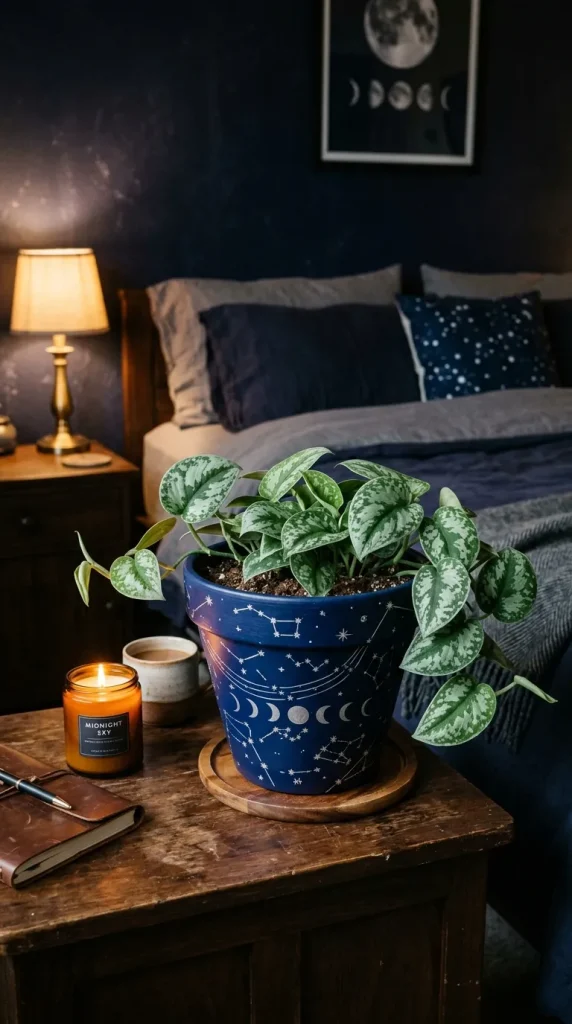
7. Moody Celestial Constellations
Bring the beauty of a clear night sky indoors. This design works particularly well on bedside tables, reading nooks, or dimly lit study spaces.
- The Palette: Midnight navy, indigo, deep plum, and delicate silver or white.
- The Technique: Sponge a cloudy blend of deep navy, violet, and black onto the surface to simulate a cosmic nebula. Once dry, flick a stiff-bristled toothbrush loaded with watered-down white paint across the surface for scattered stars, then connect selected clusters with delicate silver constellation lines.
- Best Paired With: Silver-toned plants such as Scindapsus pictus (Satin Pothos) or Tradescantia zebrina.

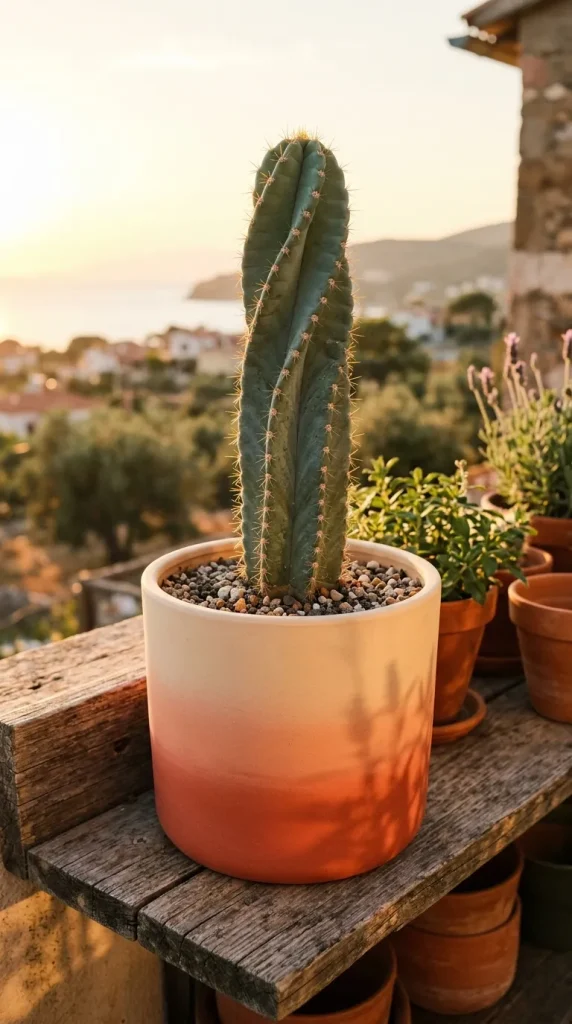
8. Textured Sunset Ombré
A gradual color gradient mimics the natural progression of golden hour, infusing warmth and visual softness into neutral or modern rustic living areas.
- The Palette: Deep maroon, dusty coral, sunset peach, and warm cream.
- The Technique: Apply your darkest tone at the base and the lightest at the rim. While the acrylic is still wet, use a damp blending sponge to seamlessly merge the transition zones between colors, softening any harsh delineation lines.
- Best Paired With: Upright, sun-loving plants like the Candelabra Cactus or Sansevieria moonshine.
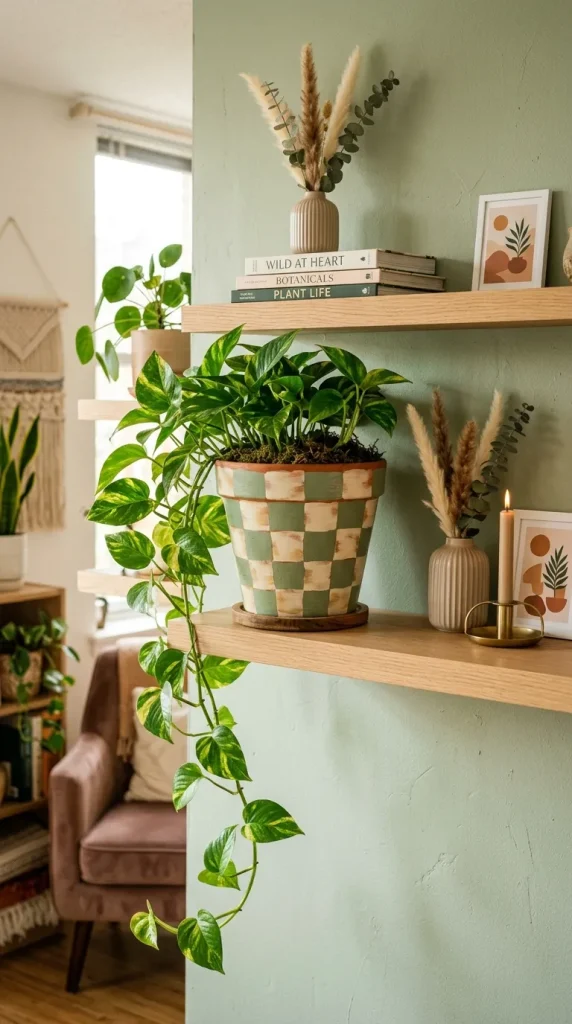
9. Modern Checkerboard Accent
Retro checkerboards have made a major comeback in contemporary interior styling, balancing playful vintage charm with structured geometric order.
- The Palette: Sage green and warm cream, or dusty lavender and soft ecru.
- The Technique: Measure uniform square dimensions around the pot using a flexible measuring tape and pencil. Carefully hand-paint alternating squares in your chosen accent color, leaving the contrasting color as the base. Hand-painted variations give the pattern a charming, handmade warmth.
- Best Paired With: Glossy, vibrant vines like the Golden Pothos or Philodendron brasil.
10. Groovy Abstract Waves & Swirls
Fluid, curved lines create movement and a playful, organic energy that breaks up the rigid straight lines of modern furniture and shelving.
- The Palette: Warm ochre, olive green, cream, and soft clay pink.
- The Technique: Use a flat, wide brush loaded with paint to sweep undulating, ribbon-like waves across the pot in alternating widths. Let curves drape over the rim and curve toward the base to create dynamic three-dimensional flow.
- Best Paired With: Trailing or arching plants like Philodendron hederaceum (Heartleaf Philodendron) or the Boston Fern.

Essential Tips for Painting Terracotta
To ensure your hand-painted creations last for years without bubbling or peeling, keep these functional tips in mind:
- Seal the Interior: Terracotta is naturally porous, meaning water from inside will seep through the clay and push the paint off the exterior. Always spray the interior of the pot with a waterproof acrylic sealant before painting the outside.
- Clean & Prep: Wipe off all dust and soak new pots in water for an hour, allowing them to dry completely before applying any primer.
- Use Quality Acrylics: Heavy-body artist acrylic paints provide the best coverage and UV resistance to keep colors vibrant in sunny windows.
- Apply a Matte or Satin Topcoat: Protect your handiwork from scratches and dirt by applying two light coats of clear, non-yellowing acrylic varnish.